The Case for Recording
Why Every Quilt Deserves to Be Recorded
Within their seams, quilts hold far more than just fabric and thread. They capture your time, skill, creativity, and the season of life you were in when you made them. A quilt can preserve family stories, celebrate milestones, comfort people through difficult times, and become part of everyday memories for years or generations. Even the choices of colors, patterns, and fabrics tell something about your personality and what matters to you. The quilt carries decisions made at the fabric store, late nights at the cutting table, and the person you were thinking of while you stitched. Recording the story behind a quilt helps your posterity, friends, and family understand why a quilt was made, and gives readers insight into the heart of the maker.
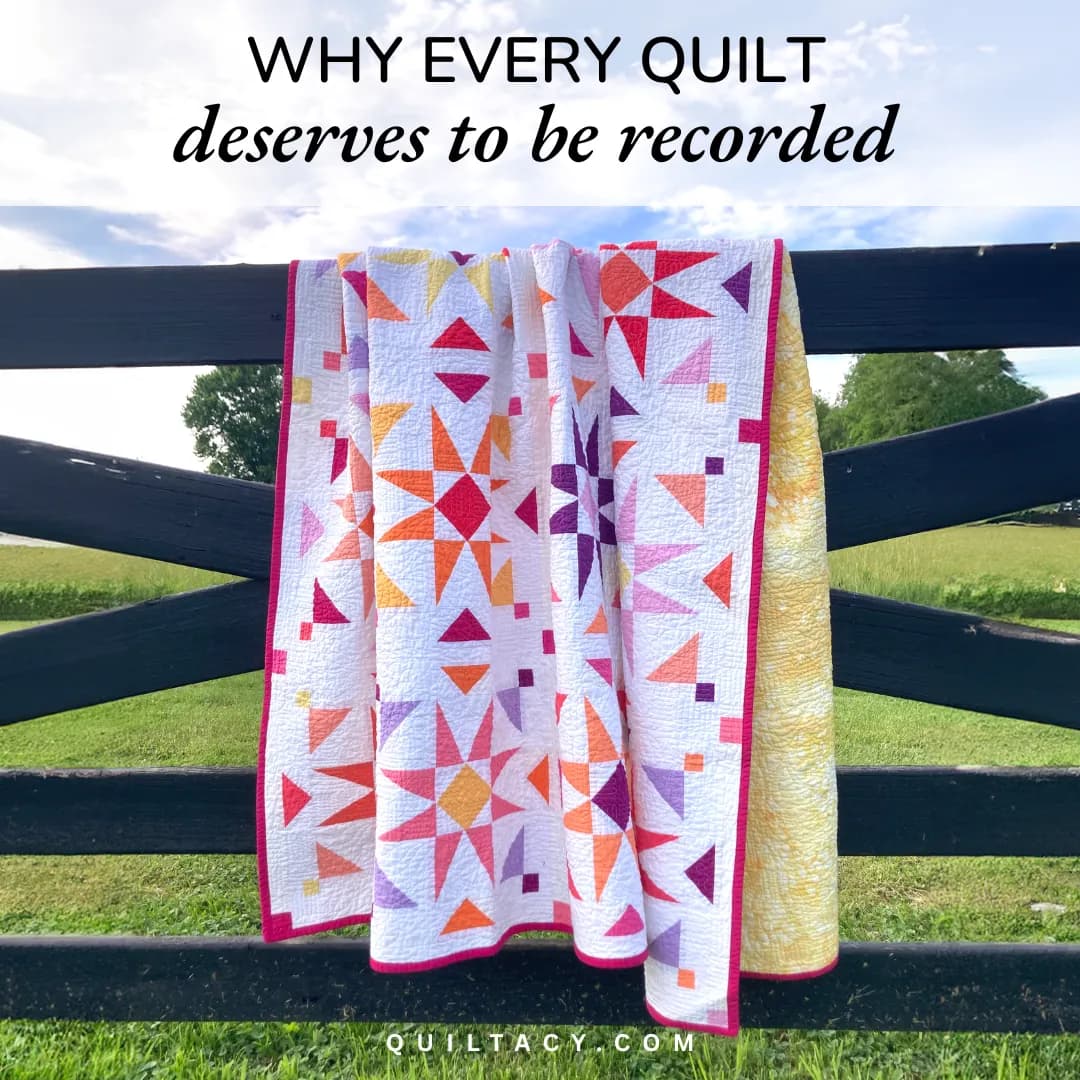
Your quilts are worth remembering
Most quilters know they should keep records, but few actually do. It's easy to tell yourself you'll remember, but the name of a specific pattern fades. The years blur. The story behind why you made a specific quilt for that person, in those particular colors, becomes harder to reconstruct with each passing season.
What a record makes possible
A record doesn't have to be elaborate. A quilt number, a name, a completion date, and a few sentences about where it came from and where it went: that's enough to turn a finished object into a documented piece of your life's work.
When you keep a log, your quilts stop being a hobby and start becoming heirlooms with a documented provenance. You can tell your grandchildren exactly how many quilts you've made and who received each one. You can show others the scope and legacy of your artwork. If a quilt is ever lost, damaged, or needs to be valued for insurance purposes, a record with photographs is vital.
Quilters who document their work also tend to grow as artists. There's something clarifying about writing down what you did and why; it makes the next quilt more intentional. You can look back across years and see your own development as a maker.
Starting where you are
You don't need to reconstruct every quilt you've ever made, in one sitting. Begin with what you're making now. Fill in what you remember about older quilts as you go. Partial records are better than no records! A photograph of a quilt with a rough date is infinitely better than nothing at all.
The quilters who have a record of their work started somewhere, even imperfectly, and kept going.